

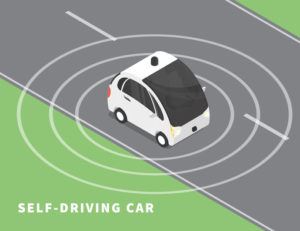
The New York Times recently reported that in driving tests, some self-driving cars will no longer have human backup drivers. In the past, Google autonomous car company Waymo, had been testing autonomous vehicles on public roads with a human backup behind the wheel. Now, the company plans to test its vehicles without backup drivers. The company may also soon allow the driverless vehicles to transport passengers.
What does this mean for safety? While the new tests bring companies a little closer to releasing fully autonomous vehicles to the public, some have concerns that the technology hasn’t been sufficiently proven and debugged to share the road with regular passenger vehicles. Furthermore, it is not just other drivers who are put at risk, but pedestrians and bicyclists who are particularly vulnerable road users.
Should you worry? Right now, the only city where driverless cars will be tested without a human backup is Phoenix, Arizona. Arizona’s laws are particularly permissive when it comes to testing driverless cars on public roads. But other cities may be soon to follow.
According to Wired, some researchers believe that driverless cars should be released as soon as possible. Studies have found that even with their imperfect technology, driverless cars are still safer than human operators. However, individuals may not be quite ready to hand over their keys. First of all, the statistics take all drivers into account—this includes drunk drivers, young drivers, inexperienced drivers, distracted drivers, and older drivers. While no driver is perfect 100% of the time, some drivers are more experienced, less distracted, and safer than others. Some drivers argue that with their experience behind the wheel, they may still be safer than an autonomous vehicle whose computer system still has trouble navigating some of the trickier city driving situations. One researcher noted that a computer-driven car is probably safer than a teen or a 90-year old. What the researcher and the statistics can’t answer is whether we are safer in autonomous vehicles than in cars driven by experienced, safe, and cautious human drivers.
At the end of the day, while letting driverless cars on the road sooner might save more human lives from a strictly utilitarian point of view, individual drivers who consider themselves safe might not be ready to relinquish control. Even if 94 percent of deadly accidents are caused by human error, people tend to remind themselves that it was not their error, but rather, someone else’s.
At the end of the day, innocent drivers are sometimes the ones who are killed or injured in car crashes. You can put down your cell phone, drive the speed limit, and put safety first and still get killed behind the wheel if someone decides to run a red light. The Law Office of Robert Gregg are personal injury lawyers in Dallas, Texas who work closely with victims who have been injured in accidents. While driverless cars won’t likely be on the road for many years, our firm is well aware of the everyday mistakes that can lead to accidents and injuries. If you’ve been hurt in a crash, you may be entitled to seek damages under the law.